


Table of Contents
Binance is a go-to option for many Kenyans looking to trade cryptocurrencies. At the same time, it has become a hotbed for fraudsters seeking easy pickings. In April 2026, many Binance P2P users came out under the banner #BinanceUnmasked on X to air out their frustrations. The move also came as Binance froze multiple Kenyan P2P accounts allegedly at the request of law enforcement.
So how do you stay safe on Binance P2P? In this article, we explore some of the most prevalent Binance P2P scams in Kenya and how to avoid them. It is a recommended read for both beginner and regular crypto readers.
Why are scammers picking on Binance P2P traders in Kenya?
The crypto landscape is quickly evolving, and Kenyan law is slowly catching up. The VASP Bill 2025 established a legal framework for licensing, monitoring, and taxing crypto exchanges and wallet providers in Kenya. The transition period runs until 4 November 2026; after that, unlicensed platforms are banned. This means most exchanges are still operating in a legal grey area.
Scammers, aware of how local laws operate, also take advantage of small traders. A trader who loses Ksh 5K in a P2P scam may feel shy to follow up with authorities for fear of incurring more costs or losing valuable time. The scammers therefore target multiple traders while stealing small amounts.
Cryptocurrencies are also a novelty for many Kenyans. Scammers are aware of this and therefore use intimidation or urgency tactics to lure victims into their traps. They may also share false trading guidelines. Once successful, the scammers quickly withdraw the funds from their accounts to prevent account freezing or chargebacks.
Also read: How to sell Bitcoin in Kenya
5 common Binance p2p scams in Kenya
| p2p scam | How to prevent |
| The delay scam/ waiting game | Submit evidence after appeal, be patient |
| Payment reversal/ chargeback | Move funds from the active KSh account before releasing crypto |
| Fake payment confirmation | Collaborate with the arbitrator and disapprove the scammers evidence |
| Third party account payment | Strictly avoid third-party payments. If such happens, ask the counterparty to reverse the funds and cancel trade |
| Off-platform deals | Avoid such deals, strictly trade within Binance escrow’s safety |
The delay scam
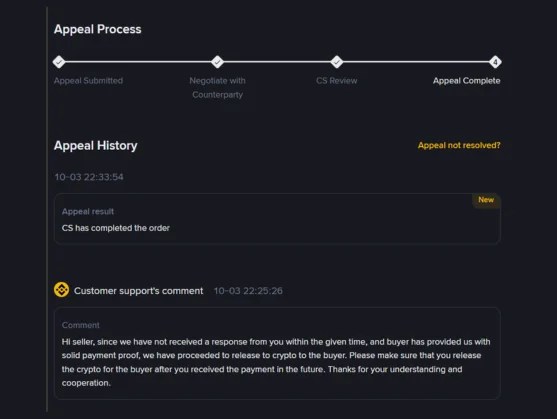
This scam targets your patience. You make a p2p trade with a counterparty, but they fail to hold their end of the bargain despite the funds being held in escrow.
For a sell trade, the scammer may refuse to release crypto after you send them payment. In this case, they hope the trade expires, and escrow gives them back the crypto. In this case, you should indicate on the app that you have made payment before the trade expires. After that, initiate an appeal on the application.
The arbitrator in this case will require you to upload proof of payment, failure of which may result in the case being ruled in the scammers’ favor.
For a buy trade, the scammer falsely marks on their end that they have made payment. The biggest mistake you can make here is releasing crypto without actually confirming the payment has landed in your account. Appeal the trade and submit the required evidence as directed by the arbitrator.
All this while, the scammer sits back to watch how it all plays out.
In some cases (legit), there is a delay in bank or M-Pesa transfers; in such a scenario, wait until the payment clears, then release crypto)
Payment reversal trick

Payment reversal or chargeback scams are common on p2p platforms. Basically, you initiate a sell order, and the buyer/ scammer makes payment. You subsequently release crypto. Local payment applications like M-Pesa allow users to initiate a payment reversal within 24 hours. The scammer works within that window to initiate a reversal. By the time you appeal, they have already cleared their accounts to avoid liability.
M-Pesa users have allegedly complained of reversals being completed without their consent, particularly when the payment is from an M-Pesa till number.
As a rule ot thumb, move money from your active account after receiving payment, then proceed to release crypto. Maintain minimum balance until the reversal window expires.
Fake payment confirmation
Fake payment confirmation scams are the most frustrating. A motivated fraudster will falsely indicate that they have made payment on a crypto trade, and after appealing, they will go ahead and submit false evidence; this includes fake Mpesa messages and bank statements.
Binance arbitration usually provides time limits within which evidence is submitted. If you delay, they might rule in favor of the fraudster. Otherwise, it’s your word against theirs. In this case, while frustrating, you should endeavour to provide proof to the arbitrator that the counterparty is scamming.
Binance has strict rules against such scammers; repercussions include account freezes or escalation with local authorities.
Third-party account payment
Third-party account payment comes from a different name or suspicious account. This exposes you to fraud investigations or frozen funds if the source is flagged.
Picture a phone robbery. The robber sends you money from the stolen phone, and you send them crypto. Authorities then follow up, and you have to explain why you hold stolen funds. The source of the funds goes beyond robbery; they could be part of a money laundering deal.
In May 2026, a Nairobi court detained a p2p for allegedly being involved in a crypto fraud scheme. In his defence, he pleaded he was just a P2P trader who had nothing to do with the scheme.
Off-platform deals
Fraudsters lure traders off Binance P2P with promises of better rates. Once outside the platform’s escrow protection, victims are left vulnerable to theft.
The scam involves several successful trades on Binance P2P to build trust. Afterwards, the scammer offers to trade away from Binance’s escrow safety. Offline deals promise fewer processes and no transaction costs. You make the trade, and the counterparty fails to hold their end of the bargain.
Conclusion
Binance P2P offers Kenyans a convenient way to buy and sell cryptocurrencies, but it also comes with risks. To protect yourself, always trade within Binance’s escrow system, verify payments directly in your account before releasing crypto, and avoid third-party payments or suspicious off-platform deals. If a trade seems suspicious, raise an appeal promptly and provide clear evidence. Remember, a little caution can save you from losing your hard-earned money.
Disclaimer: The information published on DropNomads.com is for general informational and educational purposes only. While we strive to keep our content accurate and up to date, we make no guarantees regarding its completeness, reliability, or accuracy. Any action you take based on the information on this website is strictly at your own risk. DropNomads.com shall not be held liable for any losses or damages arising from the use of this website. Some articles may contain affiliate links or sponsored content, through which we may earn a commission at no additional cost to you. External links are provided for convenience, and we are not responsible for the content or practices of third-party websites. By using this website, you agree to this disclaimer.


